When Is Inpatient Psychotherapy Advisable? Indications And Methods Explained
Inpatient Psychotherapy: What It Involves and When It Is Appropriate
1.1 Scope and Objectives of Inpatient Psychotherapy
1.2 Who Might Benefit From Inpatient Psychotherapy
Outpatient, Day-care or Inpatient? Finding the Right Form of Treatment
2.1 An Overview of the Three Forms of Treatment
2.2 Warning Signs That Suggest Inpatient Treatment
Process, Daily Routine and Personal Life Areas
3.1 Assessment and Individual Treatment Plan
3.2 Structure, Environment and Length of Stay
3.3 Work, Family and Data Protection
The Path to the Clinic: Consultation, Costs and Preparation
4.1 First Steps: Consultation and Referral
4.2 Costs and Cost Cover
4.3 Practical Preparation: What Makes the Start Easier
Treatment Options at the LIMES Schlossklinik Bergisches Land
6.1 How Long Does Inpatient Psychotherapy Last – and What Does This Depend On?
6.2 Can I Receive Visitors or Go Home During My Stay?
6.3 What Happens If, During Treatment, I Realise I Do Not Want to Stay?
Inpatient Psychotherapy: What It Involves and When It Is Appropriate
Mental health challenges are a part of life. Many conditions can be treated effectively on an outpatient basis, and some even subside without therapy. However, there are situations in which daily life is so severely affected that a short break and an intensive, supported treatment setting become necessary. This refers to psychotherapeutic treatment in a clinic, where you live there for a limited period to focus entirely on stabilisation, diagnosis and therapy.
People with high levels of professional responsibility, in particular, often put off taking this step for a long time – not infrequently until their energy levels noticeably wane and they experience mental exhaustion sets in. In an inpatient setting, there is more time, more structure and a closely supervised therapeutic environment available than in standard care. This can be particularly important when several stressors coincide, when outpatient measures have not yet provided sufficient help, or when acute crises require more intensive support.
Scope and Objectives of Inpatient Psychotherapy
Inpatient psychotherapy differs from purely psychiatric acute care, which is primarily aimed at rapid crisis intervention and risk management. It follows an individual treatment plan that combines psychotherapeutic, psychiatric and psychosomatic elements, and usually extends over several weeks within a structured daily routine.
Key objectives include stabilisation, understanding internal interrelationships, addressing triggering and perpetuating factors, and developing protective factors suitable for everyday life. The physical and temporal distance from one’s familiar surroundings creates the space needed to break established patterns and, with professional support, to re-evaluate sources of stress. The experience of receiving continuous support within a therapeutic setting makes it easier for many people to engage with their own issues.
Who Might Benefit From Inpatient Psychotherapy
In general, inpatient psychotherapy may be considered if mental health symptoms are moderate to severe, if the ability to cope with daily life is significantly impaired, or if several disorders are present simultaneously. Recurrent or long-standing symptoms that have not improved sufficiently through outpatient treatment also often indicate a need for more intensive treatment. Typical indications where the protected setting of a clinic can provide the necessary support include:
- Depression
Severe or recurrent depressive episodes, often accompanied by a lack of motivation and sleep disturbances. - Anxiety and panic disorders
Pronounced anxiety that increasingly restricts everyday life. - Obsessive-compulsive disorder
Distressing obsessive thoughts and compulsive behaviours that take up a great deal of time and energy. - Post-traumatic stress disorder
Persistent symptoms following distressing or traumatic experiences. - Burnout and exhaustion
Severe stress-related states of exhaustion accompanied by physical symptoms. - Eating disorders
Such as anorexia, bulimia or binge eating, often accompanied by a pronounced sense of loss of control. - Addiction disorders
Where addictive behaviours complicate the treatment of other conditions.
Whether inpatient treatment is appropriate in any given case can only be determined on an individual basis – in consultation with the treating specialists and taking your specific life circumstances into account.
Get an overview of the treatment areas at the LIMES Schlossklinik Bergisches Land.
Outpatient, Day-care or Inpatient? Finding the Right Form of Treatment
The most suitable form of treatment depends on the severity of the condition, its stability, previous experience and your life circumstances. Outpatient psychotherapy is sufficient and effective in many cases. However, if the burden of symptoms is high, your daily routine is disrupted or triggers in your immediate environment make it difficult to work through your issues, semi-residential or residential forms of treatment offer advantages.
An Overview of the Three Forms of Treatment
The three forms of care differ primarily in terms of intensity and proximity to everyday life:
- Outpatient psychotherapy – Regular sessions whilst maintaining an otherwise stable daily routine; new strategies can be tried out immediately in the patient’s everyday environment. Suitable for mild to moderate cases.
- Part-time (day clinic) treatment – You spend the days of treatment at the clinic and the evenings at home. Intensive yet closely aligned with everyday life – provided the home environment is supportive.
- Inpatient psychotherapy – A continuous, protected setting with overnight stays. Recommended for high symptom burden, a disrupted daily routine or a highly stressful environment
The key factor is which form of care best helps you, in your specific situation, to achieve your goals and avoid relapses. An open discussion with your treating doctors or psychotherapists will help clarify which level of intensity and treatment framework are appropriate. This decision is not a permanent ‘either/or’ choice: forms of treatment can be combined, and a change – for example, from inpatient treatment to outpatient aftercare – is a planned step, not a step backwards.
Arrange a personal consultation to clarify which form of treatment is best suited to your situation.
Warning Signs That Suggest Inpatient Treatment
Not every crisis requires an inpatient stay. Nevertheless, there are clear circumstances in which the benefits outweigh the drawbacks. The following warning signs suggest that inpatient psychotherapy should be considered:
- Severe impairment of functioning
When sleep, nutrition, personal hygiene, social contacts or work are persistently affected, or when managing daily life requires a great deal of effort. - Acute crises and safety
In cases of severe internal tension, self-harm risks or thoughts of self-harm, where protective measures at home are insufficient. - Complex or comorbid conditions
When several conditions co-occur – such as depression and an anxiety disorder, trauma and substance use, or an eating disorder and obsessive-compulsive symptoms. - Risk of chronicity
When outpatient therapies fail to produce sufficient results despite the patient’s commitment, relapses become frequent, or old patterns become entrenched.
Concomitant physical conditions, severe sleep disorders or somatoform symptoms may require closer medical supervision, such as that provided by an inpatient setting.
In cases of acute risk, safety is the top priority. If you feel you are in immediate danger or are having thoughts of self-harm, do not wait for a hospital bed; instead, contact one of the following support services immediately:
- Emergency number 112 or the nearest psychiatric A&E
- Medical out-of-hours service: 116 117
- Telephone counselling: 0800 111 0 111 (24 hours a day, free of charge and confidential)
Process, Daily Routine and Personal Life Areas
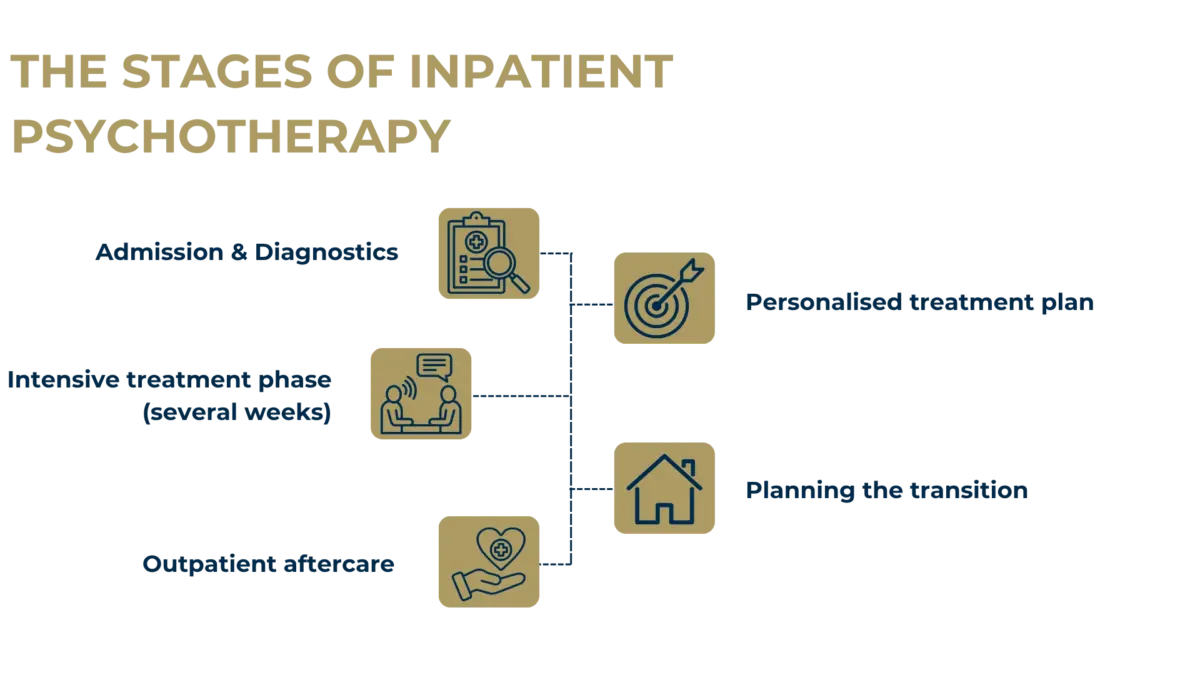
The process is tailored to the individual, but usually follows clear steps: a detailed assessment, the joint setting of goals, a treatment plan tailored to your needs, and regular evaluation of your progress. The therapeutic relationship is central to this – frequent individual and group therapy sessions help you to recognise patterns, adopt new perspectives and practise these in a safe environment.
Assessment and Individual Treatment Plan
The process begins with medical, psychological and – where necessary – psychosomatic assessments. The aim is to accurately identify symptoms, triggers and resources. On this basis, a treatment plan is drawn up with clear goals and priorities, which is reviewed and adjusted during regular progress meetings. Transparency and active involvement are key principles throughout this process.
Structure, Environment and Length of Stay
Daily life within the therapeutic setting serves as a training ground. Fixed timetables, regular meals, sleep hygiene, exercise and social interaction help to regulate patterns of stress and exhaustion. The environment – the therapeutic community – provides support and opens up new experiences.
The length of stay depends on the clinical indication and progress made; a stay of several weeks is often advisable. Over the course of treatment, strategies relevant to everyday life are consolidated, risks of relapse are discussed and the transition to outpatient follow-up care is planned at an early stage.
Work, Family and Data Protection
Mental health conditions often affect work, family and social relationships. Experience shows that three aspects are particularly important and should be addressed at an early stage:
- Employment situation and sick leave
During the stay, a sick note is usually issued. The aim is not to withdraw from work, but to receive medically necessary treatment – it is often possible to develop phased plans for a return to work. - Involving family members
Guided discussions can foster understanding and provide relief; helpful suggestions on what relatives can do support the process. You decide, together with the team, whether and how they are involved. - Data protection and privacy
Confidentiality is a top priority. Information will only be shared with your consent; clear rules to protect privacy also apply in day-to-day ward life.
Find out more about the range of therapies offered by the LIMES Schlossklinik Bergisches Land.
The Path to the Clinic: Consultation, Costs and Preparation
The decision to undergo inpatient psychotherapy is a significant one and deserves time, information and careful, individual consideration. It is helpful to clarify expectations in advance: What do you hope will change as a result of your stay? How will you recognise progress? What support will you need for the period following your discharge?
First Steps: Consultation and Referral
The process often begins with a consultation at the clinic or on the recommendation of treating specialists. During this consultation, an assessment is made as to whether inpatient psychotherapy is appropriate and what the general conditions are – organisational matters such as the expected waiting time, length of stay and visiting arrangements can also be clarified at this stage. The clinic provides separate information for referring doctors.
Costs and Cost Cover
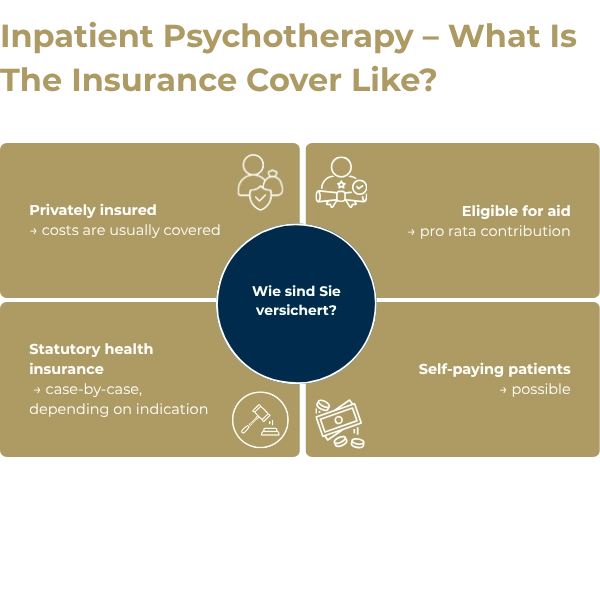
As a private acute care clinic, the LIMES Schlossklinik Bergisches Land generally settles accounts with private insurers. Private health insurance providers and subsidy agencies often cover the costs of treatment; for those with statutory health insurance, specific regulations apply depending on the medical condition, and it is also possible to pay for treatment out of pocket. Please clarify in advance which documents and authorisations are required – the clinic’s administration team will assist you with the application process if needed. As obtaining a cost approval can take time, it is advisable to make arrangements well in advance, ideally before the planned admission date.
Practical Preparation: What Makes the Start Easier
Structured preparation reduces uncertainty and makes the start easier. The following have proven helpful:
- an up-to-date list of medications, as well as relevant doctors’ letters and diagnoses,
- contact details of your treating doctors and therapists,
- notes on your personal treatment goals,
- Clothes for indoors and outdoors, as well as comfortable sportswear,
- personal items that help you feel at ease, such as a diary.
Make a conscious effort to plan for some respite during the first week and, if possible, organise support at home. The page on Accommodation page gives an impression of the rooms and facilities; the Arrival and Stay.
Find out about the admission process at the LIMES Schlossklinik Bergisches Land.
Treatment Options at the Limes Schlossklinik Bergisches Land
The LIMES Schlossklinik Bergisches Land is a private acute care clinic specialising in psychiatry, psychotherapy and psychosomatics in Lindlar – nestled within the parkland surrounding Heiligenhoven Castle. With 128 beds, it offers a manageable, personalised setting; its location away from the urban environment is a deliberate part of the therapeutic approach. In this peaceful, sheltered setting, people with mental and psychosomatic illnesses receive individually tailored, intensive inpatient psychotherapy that effectively combines medical, psychological and body-oriented approaches.
Following a comprehensive assessment, a treatment plan is developed jointly. The aim is to provide effective symptom relief, to help patients understand their own patterns of behaviour, and to develop sustainable strategies for everyday life. Depending on the indication, the therapeutic programme includes the following key components in particular:
- High-frequency individual and group psychotherapy
Disorder-specific approaches to address personal issues in a targeted manner and to try out new strategies in a safe environment. - Psychiatric, psychological and psychosomatic assessment
To ensure precise assessment and ongoing adjustment of the treatment plan. - Psychoeducation
Easy-to-understand information on models of illness, stress management and relapse prevention. - Pharmacotherapy
Where indicated, following careful consideration and explanation of the benefits and possible side effects. - Body- and movement-oriented approaches
Including, amongst others LIMES Sports.Care, yoga or qigong, as well as dance and movement therapy – tailored and motivating. - Relaxation and mindfulness
For example, mindfulness and breathing exercises, as well as progressive muscle relaxation for stress management. - Creative and occupational therapy
Non-verbal expression, self-awareness and stimulation as a complement to psychotherapy.
Conditions treated include, amongst others, depressive disorders, anxiety and obsessive-compulsive disorders, post-traumatic stress disorders, burnout, somatoform disorders, eating disorders and substance use disorders – including complex cases involving multiple co-occurring disorders. Preparations for the period following your stay begin whilst you are still here: with recommendations for further outpatient treatment, specific relapse prevention plans and, where necessary, the involvement of family members. Whether inpatient psychotherapy is suitable for you will be clarified during an individual consultation.
Arrange a no-obligation initial consultation with the LIMES Schlossklinik Bergisches Land.
FAQ
How Long Does Inpatient Psychotherapy Last – and What Does This Depend On?
The duration varies depending on the diagnosis, severity, goals and progress. It often takes several weeks to stabilise, understand patterns and practise new strategies. As treatment progresses, the duration is reviewed and adjusted together. A well-planned transition to further outpatient treatment is important.
Can I Receive Visitors or Go Home During My Stay?
Visiting and leave arrangements vary from clinic to clinic. During the first few days, the focus is usually on settling into the new environment. After that, visits are possible by arrangement, provided they are therapeutically beneficial. The aim is to ensure recovery and maintain the therapeutic environment, whilst also incorporating social support.
What Happens If, During Treatment, I Realise I Do Not Want to Stay?
Please discuss this with the treatment team at an early stage. Often, reasons such as homesickness or initial uncertainty can be clarified and solutions found together. If you nevertheless wish to end your treatment, a safe transition will be planned – including a recommendation for further outpatient treatment. Your safety and well-being are our top priority.