Understanding Chronic Fatigue – When Rest Is No Longer Enough
Table of Contents
Chronic Fatigue – More Than Just Tiredness
1.1 What Chronic Fatigue Means
1.2 Typical Symptoms and Warning Signs
1.3 When Exhaustion Becomes a Health Problem
Stress as a Trigger – How Prolonged Stress Affects the Body and Mind
2.1 The Link Between Depression and Stress
2.2 How Chronic Stress Changes the Body
Exhaustion-related Depression – When Energy and Motivation Are Permanently Lacking
3.1 What Characterises Exhaustion-related Depression
3.2 Mental and Physical Symptoms
3.3 How Exhaustion-related Depression Manifests Itself in Everyday Life
Burnout or Depression – What Are the Differences?
4.1 Burnout and Depression – the Difference Explained in Simple Terms
Treatment Methods at the LIMES Schlossklinik Bergisches Land
6.1 Can Chronic Fatigue Also Be Caused by Physical Illnesses?
6.2 What Role Do Lifestyle and Diet Play in Chronic Fatigue?
6.3 Can Chronic Fatigue Disappear Completely?
Chronic Fatigue – More Than Just Tiredness
What Chronic Fatigue Means
Everyone feels tired or exhausted from time to time. However, these feelings usually disappear after a good night’s sleep, a short break or a relaxing weekend. Chronic chronic fatigue , on the other hand, is when this feeling persists over a longer period and is scarcely alleviated even by rest.
Those affected often report feeling constantly drained, as if their physical and mental resources are completely exhausted. The energy that used to be sufficient for everyday tasks is increasingly lacking.
Typical characteristics of chronic fatigue may include, amongst others:
- Persistent tiredness despite getting enough sleep
Many people affected sleep enough or even longer than usual, yet still do not feel refreshed in the morning. The feeling of physical and mental tiredness often accompanies them throughout the day.
- Severe mental exhaustion
Concentration, attention and decision-making ability can be significantly impaired. Even simple tasks can feel overwhelming or very exhausting.
- Emotional strain
Chronic fatigue can also have an emotional impact. Irritability, inner restlessness or a reduced ability to cope with stress are common.
- Reduced ability to cope with everyday life
Activities at work, at home or in social settings become increasingly difficult. Things that used to be taken for granted suddenly require a great deal of energy.
Chronic fatigue is therefore not merely a feeling of tiredness, but a complex condition that can affect both the body and the mind in equal measure.
Typical Symptoms and Warning Signs
The symptoms of chronic fatigue can manifest in very different ways. Whilst some sufferers experience mainly physical symptoms, for others the psychological strain tends to be more prominent. However, both aspects often occur simultaneously.
Typical warning signs include, amongst others:
- Persistent tiredness and lack of energy
- Difficulty concentrating or memory problems
- Sleep problems or non-restorative sleep
- Reduced motivation and a lack of drive
- Increased irritability or emotional exhaustion
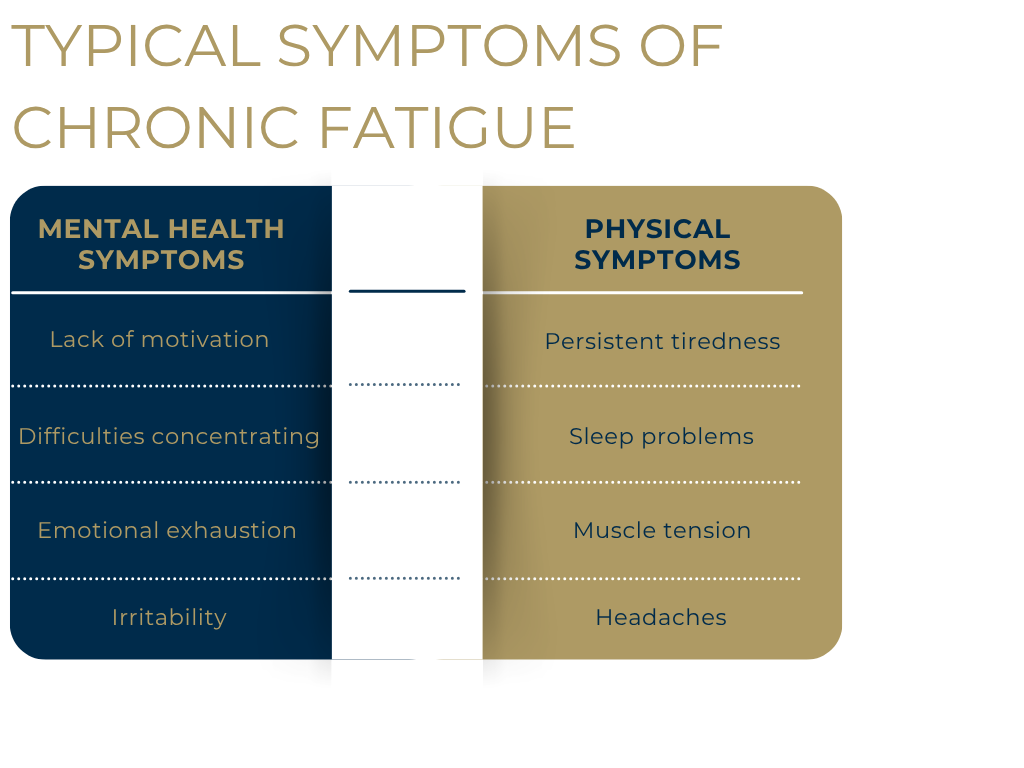
Physical symptoms may also occur. These include, for example, headaches, muscle tension, gastrointestinal problems or a weakened immune system. These symptoms can significantly disrupt daily life and often lead to those affected becoming increasingly withdrawn.
If these symptoms persist for weeks or even months, this may be a sign that there is more to the exhaustion than just temporary overwork.
When Exhaustion Becomes a Health Problem
Not every bout of tiredness or stress is automatically a health problem. It is often a natural reaction to high levels of stress in everyday life. However, the situation becomes critical when exhaustion persists over a prolonged period and even periods of rest no longer bring about any noticeable improvement. One warning sign, for example, is if tiredness and a lack of energy persist for weeks or months, even though you are trying to rest or reduce stress. Similarly, if weekends, holidays or days off no longer leave you feeling truly refreshed, this may indicate that your body is no longer regenerating sufficiently.
Many people affected also notice that everyday life is becoming increasingly difficult. Tasks at work or in their private lives seem more exhausting than before, and even minor commitments can quickly feel overwhelming. At the same time, psychological changes may also become apparent, such as a lack of motivation, hopelessness or a feeling of inner emptiness. If such signs persist over a longer period, it may be advisable to seek professional support. An early assessment helps to identify possible causes and find suitable treatment options.
Stress as a Trigger – How Prolonged Stress Affects the Body and Mind
The Link Between Depression and Stress
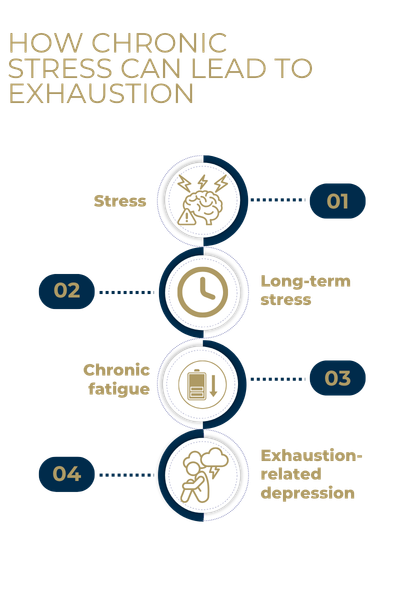
Stress is part of everyday life for many people. Short-term stress can even be helpful, as it energises the body and boosts performance in the short term. However, it becomes problematic when stress persists over a long period and there are no longer sufficient periods of rest.
Between depression and stress. Prolonged stress can lead to an increasing depletion of physical and mental resources. If the body is under pressure for an extended period, this can contribute to the development of depression.
So-called chronic stress is particularly critical. This arises, for example, from persistent work-related overload, family pressures or personal crises. The body is then in a permanent state of heightened alertness. Stress hormones such as cortisol are continuously released, which can disrupt important regenerative processes.
In the long term, this condition can have various consequences:
- Emotional balance is thrown off kilter.
- Exhaustion and listlessness increase.
- The ability to cope with stress decreases.
This progression can lead to persistent stress gradually giving rise to symptoms of depression.
How Chronic Stress Changes the Body
When stress persists over a long period, it affects not only the mind but also numerous physical processes. The body remains in a constant state of heightened activity, which is actually intended only for short-term stressful situations.
The body’s so-called stress system – particularly the connection between the brain, the endocrine system and the nervous system – remains constantly activated. This can lead to various changes.
Possible physical effects include, amongst others:
- Disturbances in sleep patterns
Many people suffering from chronic stress find it harder to fall asleep or wake up more frequently. Sleep becomes less restorative, which can further exacerbate exhaustion.
- Persistent muscle tension
Stress often leads to tension in the neck, shoulders or back. This, in turn, can cause pain and put additional strain on the body.
- Weakening of the immune system
A persistently high stress level can impair the body’s defences. As a result, infections may occur more frequently.
- Impaired concentration and memory
Chronic stress can also affect cognitive functions. Those affected often report problems concentrating or a feeling of being mentally overwhelmed.
These physical changes show that stress is not merely an emotional burden. In the long term, it can affect the entire body and thereby contribute to the development of chronic fatigue or exhaustion-related depression .
Exhaustion-related Depression – When Energy and Motivation Are Permanently Lacking
What Characterises Exhaustion-related Depression
So-called exhaustion-related depression describes a condition in which prolonged stress leads to depressive symptoms. It often does not arise suddenly, but develops gradually over a longer period of time. Many sufferers initially experience a phase of intense stress, during which they try to cope with demands at work or in their private lives on a long-term basis.
If this stress persists and there are no periods of rest, physical and mental reserves can become increasingly depleted. The body then signals that it has reached its limits. Initial tiredness gradually turns into profound exhaustion, which can no longer be alleviated by rest alone.
Exhaustion-related depression differs from short-term stress primarily in terms of its duration and intensity. Whilst normal exhaustion subsides after sufficient rest, the feeling of listlessness persists in the case of exhaustion-related depression. At the same time, emotional changes may occur that significantly impair everyday life.
Mental and Physical Symptoms
The symptoms of exhaustion-related depression usually affect both the mental and physical levels. The severity of these symptoms can vary and differ from person to person.
The most common psychological symptoms include, amongst others:
- Persistent lack of motivation
Many people affected find even simple activities very tiring. Tasks that used to be easy to manage suddenly seem overwhelming.
- A feeling of inner emptiness or low spirits
Mood may be persistently low. Joy, interest or motivation noticeably diminish.
- Reduced ability to concentrate
It is difficult to focus one’s thoughts, decisions are harder to make, and mental performance may be impaired.
In addition to these psychological changes, physical symptoms often occur as well. These include, for example:
- Persistent tiredness and exhaustion
- Sleep disturbances or non-restorative sleep
- Physical tension or pain
- Increased susceptibility to stress
This combination of psychological and physical symptoms makes it clear that exhaustion-related depression is not merely an emotional burden, but can affect the entire body.
How Exhaustion-related Depression Manifests Itself in Everyday Life
In everyday life, exhaustion-related depression often manifests as a progressive decline in quality of life. Activities at work, at home or in one’s social circle become increasingly difficult and require significantly more energy. Even everyday tasks can feel overwhelming, leading to obligations being postponed more frequently or left undone altogether. At the same time, many people affected withdraw from social contact, as meeting friends or family seems exhausting.
At work, too, problems with concentration, a lack of motivation and rapid fatigue can significantly impair performance. Often, this is compounded by a waning of interest in and enjoyment of activities that were once enjoyed. As these changes usually develop gradually, they are not always immediately recognised as part of an illness. It is therefore important to take persistent exhaustion and significant changes in daily life seriously and to seek professional support if necessary.
Burnout or Depression – What Are the Differences?
Burnout and Depression – the Difference Explained in Simple Terms
The terms ‘burnout’ and ‘depression’ are often confused or even used interchangeably in everyday life. In fact, however, there are differences between the two conditions, even though many symptoms may overlap. It is particularly important to look more closely at cases of chronic exhaustion, as both burnout and depression may be factors.
Burnout is usually described as the result of prolonged professional or personal stress. Those affected feel emotionally drained, extremely exhausted and increasingly lose motivation for their work or other commitments. Often, this is preceded by an intense phase of commitment and high motivation before the exhaustion sets in.
A depression , on the other hand, is a mental health condition that does not develop solely as a result of work-related stress. It can have various causes and affect many areas of life. In addition to exhaustion, symptoms such as persistent low mood, loss of interest or severely diminished self-esteem frequently occur.
Some key differences between burnout and depression are particularly evident in their causes, effects and emotional symptoms. Burnout usually arises from prolonged stress or being overwhelmed, often in a work context, whilst depression can also occur independently of any specific stressor. Furthermore, burnout symptoms initially tend to affect work or high-pressure situations in particular, whereas depression usually impacts all aspects of life, such as social interactions or personal interests. Emotionally, burnout is characterised primarily by severe exhaustion and emotional detachment, whereas depression is more likely to involve feelings of despondency, hopelessness or a sense of inner emptiness.
In practice, however, the distinction is not always clear-cut. Burnout can, for example, develop into depression if the stress persists over a long period and adequate support is not provided.
This is why a professional diagnosis is particularly important. Specialists and psychotherapists can accurately assess individual symptoms and determine which form of treatment is most appropriate. An early assessment can help to better understand the causes of the symptoms and to initiate suitable therapeutic measures.
Treatment Methods at the Limes Schlossklinik Bergisches Land
At the LIMES Schlossklinik Bergisches Land, chronic exhaustion is treated as part of a holistic treatment programme. Following a comprehensive diagnostic assessment, specialists and therapists work with you to develop a personalised treatment plan tailored to your individual situation. An interdisciplinary team comprising medical, psychological and specialist therapeutic professionals collaborates to address both the psychological and physical aspects of the condition.
Key therapeutic approaches include, amongst others:
- High-frequency psychotherapy
Psychotherapeutic treatment forms a key part of the therapy. It takes place in both individual and group settings and enables an in-depth exploration of the causes of exhaustion. The aim is to identify distressing thought patterns, develop new coping strategies and, in the long term, regain greater stability in everyday life.
- Medication
In some cases, medication may be appropriate, for example if depressive symptoms are severe or if there are additional symptoms. Medication is prescribed only following a thorough assessment and is tailored to your individual situation.
- Somatic diagnosis and medical care
As chronic exhaustion can have both physical and psychological causes, treatment also includes comprehensive medical diagnosis. This includes, amongst other things, laboratory tests and internal medical assessments to identify any possible physical contributing factors.
- LIMES Sports.Care – Exercise as a therapeutic approach
Physical activity plays an important role in the treatment of stress-related and exhaustion-related conditions. As part of the scientifically based LIMES Sports.Care training programme, you will receive a personalised training plan that specifically integrates physical activity into the therapeutic process. Exercise can help to reduce stress, improve your sense of well-being and boost your energy levels.
- Healing Environment – the supportive effect of the surroundings
The clinic’s surroundings are also part of the therapeutic concept. The so-called ‘Healing Environment’ describes a setting that can have a positive effect on both body and mind through its architecture, natural surroundings, light and tranquillity. The clinic’s peaceful location in the Bergisches Land is designed to help you take a step back from everyday life and support the recovery process.
By combining various therapeutic approaches, a personalised treatment plan is created, designed to treat chronic fatigue holistically and to enable long-term stability in your everyday life.
FAQ
Can Chronic Fatigue Also Be Caused by Physical Illnesses?
Yes, persistent fatigue can also have physical causes. These include, for example, hormonal imbalances, thyroid disorders, chronic inflammation or certain metabolic disorders. Sleep disorders or nutritional deficiencies, such as iron or vitamin deficiency, can also lead to severe tiredness and a lack of energy. It is therefore important to seek medical advice in order to rule out or specifically treat any possible physical causes.
What Role Do Lifestyle and Diet Play in Chronic Fatigue?
Lifestyle factors can have a significant impact on energy levels and general well-being. An unbalanced diet, a lack of exercise, irregular sleep or constant high levels of stress in everyday life can contribute to increased fatigue. At the same time, healthy routines such as regular exercise, a structured daily routine and a balanced diet can have a supportive effect. However, in cases of severe chronic fatigue, these measures alone are often not enough.
Can Chronic Fatigue Disappear Completely?
The prognosis depends on various factors, such as the causes of the fatigue, the duration of the symptoms and the individual’s personal circumstances. Many people affected can achieve a significant improvement in their condition with appropriate treatment and targeted changes to their daily routine. It is important to understand the causes of the fatigue and to seek suitable therapeutic support at an early stage.
Find out more about the LIMES Schlossklinik Bergisches Land here!
Kategorien: Burnout Depression